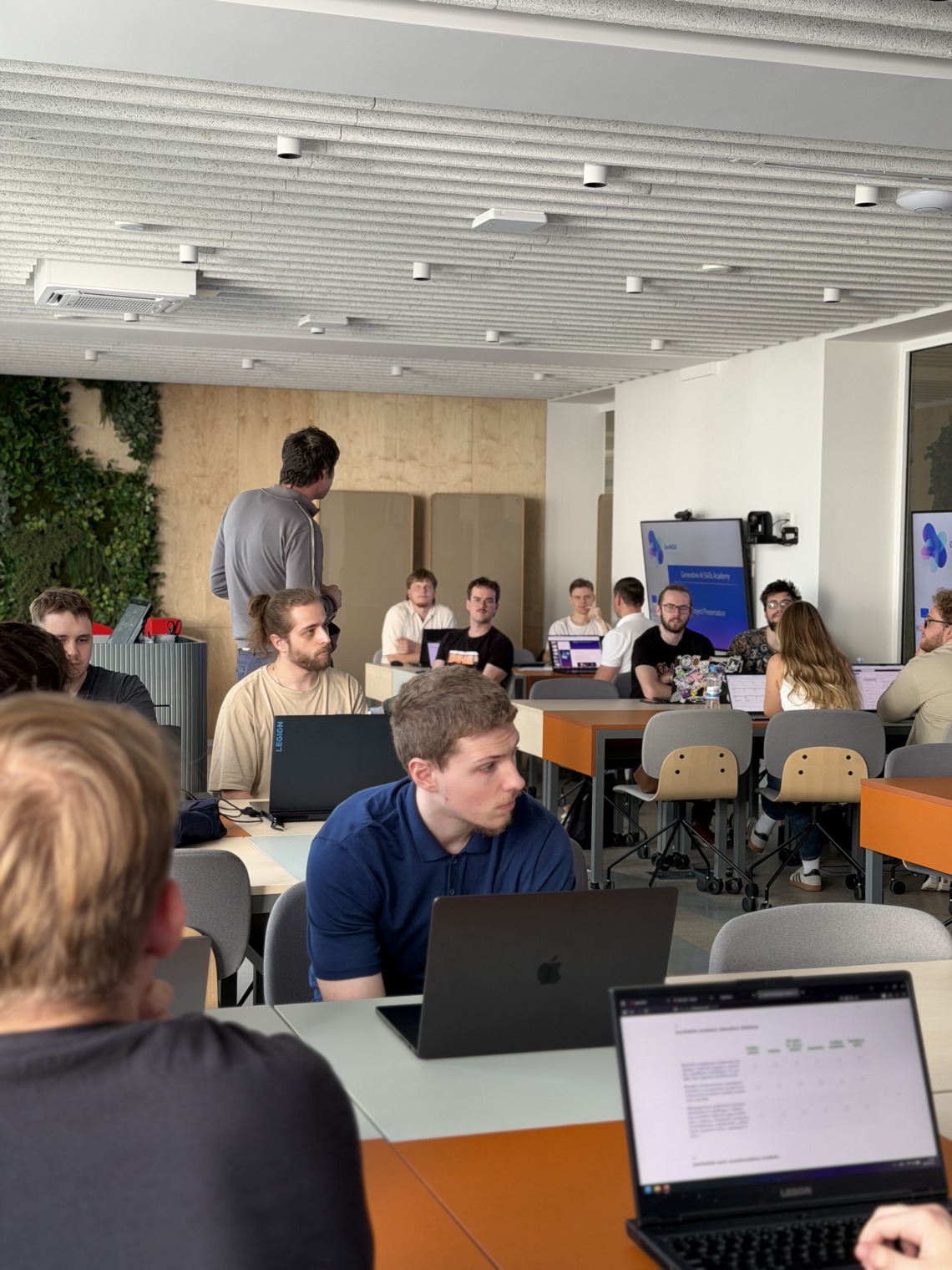
El taller GenAISA ofrece una visión práctica del potencial de la inteligencia artificial generativa.
La inteligencia artificial generativa está transformando rápidamente el aprendizaje, el trabajo y los procesos creativos. Por ello, resulta cada vez más importante no solo estar al tanto de las últimas tendencias tecnológicas, sino también probar nuevas soluciones en la práctica. Este fue el objetivo del taller organizado en el marco del proyecto Erasmus+ GenAISA (Generative AI Skills Academy), en el que los participantes exploraron las posibles aplicaciones de la inteligencia artificial generativa en los campos del procesamiento del lenguaje natural, la generación de imágenes y la generación de vídeo.
La profesora Dra. Agnė Paulauskaitė, directora del Centro de Excelencia en Inteligencia Artificial de la Universidad Tecnológica de Kaunas (KTU), subraya que el trabajo práctico con herramientas de inteligencia artificial generativa es un paso importante en el desarrollo de las competencias necesarias hoy en día en una amplia gama de campos.
“La inteligencia artificial generativa está transformando nuestra forma de aprender, crear y resolver tareas profesionales cotidianas. Por ello, es fundamental brindar a las personas la oportunidad de experimentar con estas tecnologías en la práctica: comprender su funcionamiento, sus aplicaciones y sus limitaciones. Estos talleres contribuyen a generar confianza en las tecnologías, a fomentar el pensamiento crítico y a promover un enfoque responsable en la aplicación de la IA”, afirma la Dra. Agnė Paulauskaitė.
Durante el taller, los participantes trabajaron en grupos, analizaron materiales de aprendizaje, realizaron tareas prácticas y pusieron a prueba los ejemplos proporcionados.
Este formato les permitió explorar con mayor profundidad los aspectos teóricos de la inteligencia artificial generativa y evaluar cómo funcionan las diferentes soluciones relacionadas con la generación de contenido de texto, imagen y vídeo.
Tras el taller, los participantes destacaron que el material didáctico presentado era relevante, atractivo y acorde con las tendencias actuales en tecnologías de inteligencia artificial. Las tareas prácticas, el formato de aprendizaje interactivo, el trabajo en grupo y la oportunidad de debatir escenarios para la aplicación de la inteligencia artificial generativa en diferentes campos fueron especialmente bien recibidos.
Los participantes también destacaron que el módulo les brindó la oportunidad de profundizar sus conocimientos sobre tecnologías de procesamiento del lenguaje natural, modelos de generación de imágenes y soluciones de generación de vídeo. Las actividades prácticas les ayudaron a comprender mejor qué herramientas pueden utilizarse con fines creativos, educativos o profesionales, así como las habilidades necesarias para aplicarlas de forma responsable y eficaz.
Según la profesora Dra. A. Paulauskaitė, la aplicación de tecnologías de inteligencia artificial generativa requiere no solo conocimientos técnicos, sino también un enfoque crítico del contenido generado.
“La inteligencia artificial generativa abre muchas nuevas oportunidades, pero al mismo tiempo nos recuerda que el papel del ser humano sigue siendo fundamental. La tecnología puede proponer soluciones, pero es el ser humano quien formula la tarea, evalúa el resultado, toma la decisión final y se responsabiliza de cómo se aplica la inteligencia artificial. Por lo tanto, desarrollar competencias en inteligencia artificial se está convirtiendo en uno de los requisitos más importantes para crear soluciones avanzadas y éticas que aporten valor a largo plazo”, afirma el director del centro.
Durante las sesiones también se abordaron desafíos prácticos. Uno de ellos fue la considerable cantidad de recursos informáticos necesarios para los modelos de generación de vídeo más complejos. Los participantes señalaron que la aplicación de la inteligencia artificial generativa requiere no solo creatividad y conocimientos tecnológicos, sino también una infraestructura adecuada, una evaluación crítica y un enfoque responsable del contenido que se crea.