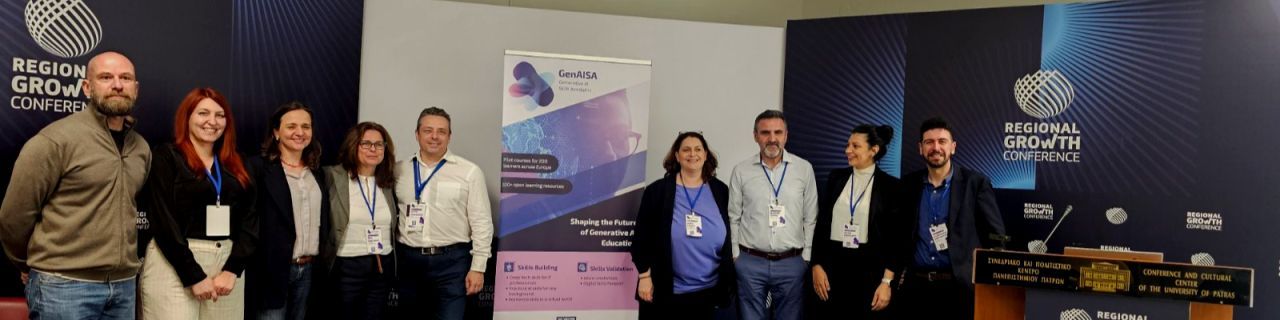
GenAISA Workshop in Greece Highlights the Future of Generative AI Skills and Education
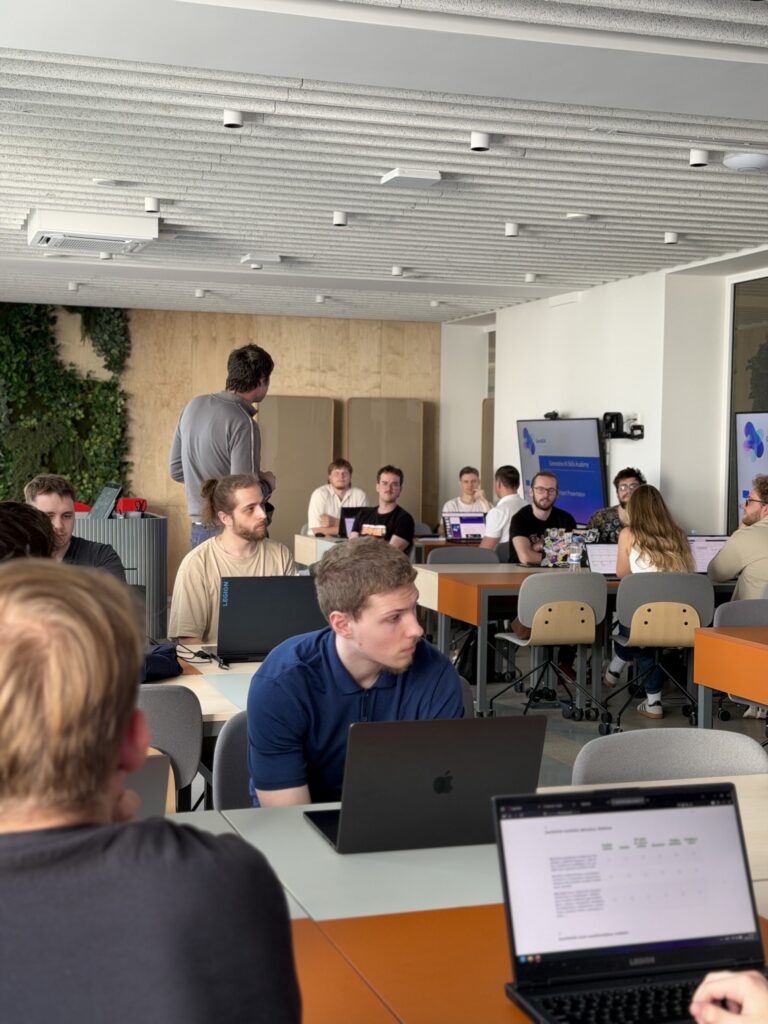
The GenAISA project successfully delivered the workshop “From Artificial Intelligence to the Skills of the Future” in Patras, Greece, on May 20, 2026. The workshop that gathered almost 100 participants was co-organised by the University of Patras, the University of Peloponnese and Olympic Training and Consulting as a parallel session of the 14th Regional Growth Conference.
The event brought together academics, students, researchers, and innovation stakeholders to explore the evolving role of Generative ΑΙ in education, employment and social innovation.
The workshop showcased a series of presentations addressing the opportunities and challenges created by rapidly advancing AI technologies and the growing need for future-oriented digital and resilience skills.
The event opened with welcoming remarks by Prof. Spyros Syrmakessis, University of Peloponnese and an introductory presentation of the GenAISA project by Associate Professor Maria Rigkou, University of Patras, who outlined the project’s vision to support the development of practical Generative AI competencies through innovative educational approaches and learning tools.
A key topic of discussion focused on the emergence of new professional profiles in the field of Generative AI. Eirini Ioannidou, University of Peloponnese, presented insights into the changing labour market and the new skillsets required for professionals working with generative AI technologies, emphasising adaptability, interdisciplinary expertise, and responsible AI use.
Participants were also introduced to the GenAISA educational toolkit, presented by Dr. Vasileios Gkamas, University of Patras and Polina Kontodiakou, Olympic Training and Consulting. Their presentation highlighted the project’s learning resources and digital tools designed to support educators and learners in acquiring practical generative AI-related and resilience skills.
The conference further explored the relationship between AI and social innovation through a presentation by Professor Spyros Syrmakessis, University of Peloponnese, who discussed social entrepreneurship and AI as a new and emerging professional pathway. The session emphasised how AI-driven innovation can support sustainable social impact and entrepreneurial opportunities.
Another important contribution came from Dr. Epameinondas Panagiotopoulos, Computer Technology Institute and Press “Diophantus”, who presented the AIDEA project, an initiative focused on training educators in AI and strengthening AI readiness within the school ecosystem.
Ethics and regulation also featured prominently in the workshop agenda. Associate Professor Niki Georgiadou, University of Patras, delivered a presentation examining the ethical principles surrounding AI and the evolving regulatory framework introduced by the European Union’s AI Act. Her presentation addressed critical issues such as transparency, accountability, and trustworthy AI implementation.
The conference concluded with a presentation by Professor Achilleas Kameas, Hellenic Open University, who discussed initiatives for supporting the ethical use of AI in education. The presentation highlighted the importance of responsible innovation, digital literacy, and human-centred approaches to AI integration in teaching and learning environments.
The event closed with an open discussion, evaluation session, and networking, allowing participants to exchange ideas and strengthen collaborations across academia, education, and industry.
The GenAISA workshop demonstrated the growing importance of generative AI literacy and reaffirmed the commitment of European educational and research institutions to preparing citizens and professionals for the future digital economy.