Resilience in the Age of AI: Navigating Workforce Transitions via Virtual Worlds
The rapid rise of generative AI is doing more than just changing how we write code or design graphics; it is fundamentally altering the rhythm of the European workplace. While technical proficiency is vital, the ability to adapt to these shifts – often referred to as resilience – has emerged as a cornerstone of professional survival.
Why Resilience Matters Now
As traditional workflows transition into AI-assisted models, professionals face a significant “human” challenge alongside the technical one. Resilience and stress tolerance are now ranked as the sixth most important skill for the future of work according to the World Economic Forum. For those in tech roles especially, the capacity to recover from the disruptions caused by automation and shifting job requirements is no longer a “soft” bonus; it is a core requirement.
Immersive Learning: The Virtual World
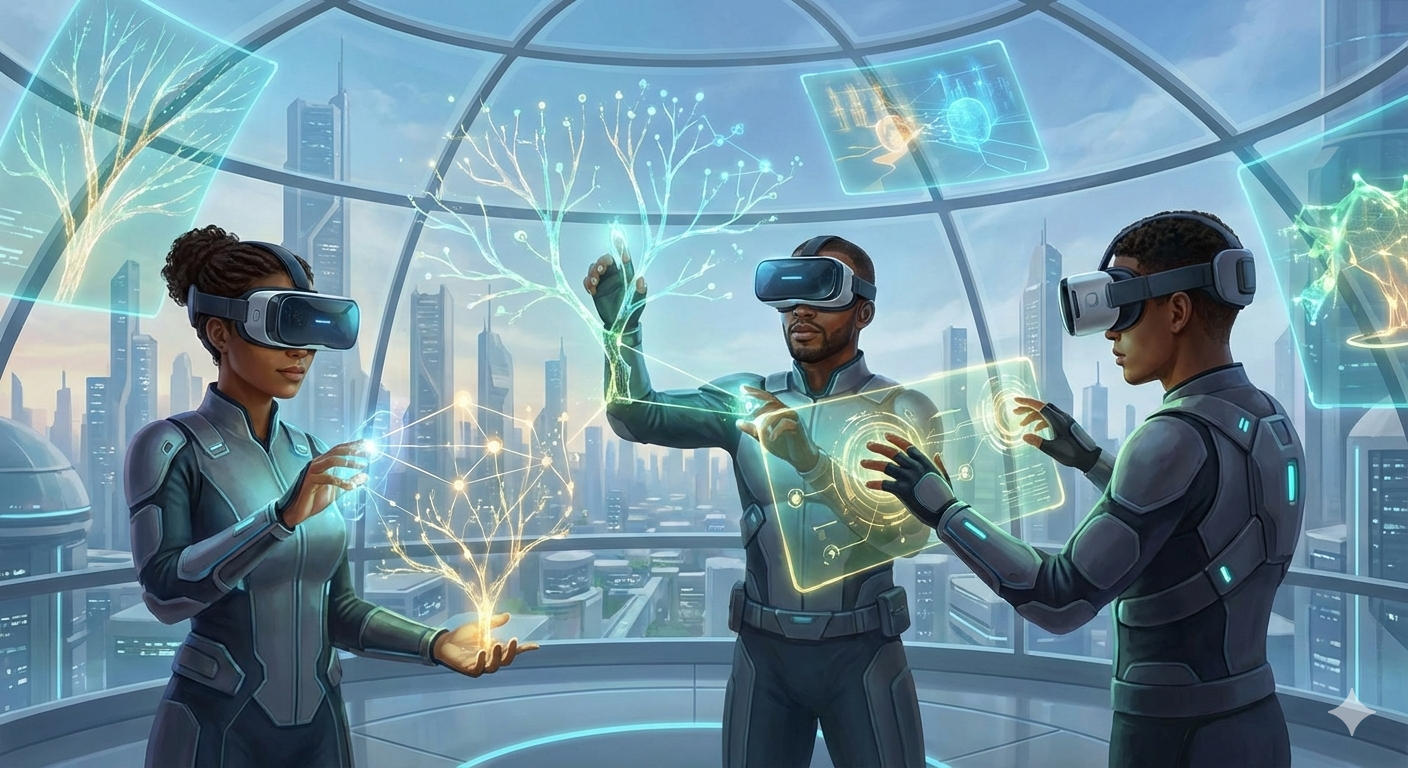
To address this, the GenAISA project is moving beyond traditional classroom settings. While our core AI curricula are delivered via a MOOC, the dedicated course on resilience skills is being tested within an immersive Virtual World environment.
This platform allows learners to navigate realistic workplace scenarios where they can practice cognitive and behavioural adaptation in a safe, simulated space. By using a virtual environment, the project aims to address the multifaceted nature of resilience – covering emotional, social, and cognitive components that are often difficult to teach through text alone.
GenAISA’s Integrated Approach
This initiative is a central pillar of the GenAISA project’s mission to bridge the generative AI skills gap. The Resilience Skills course is designed to complement our two primary curricula:
- Higher Education (HE): Focused on designing and developing AI solutions.
- Vocational Education and Training (VET): Focused on the safe and ethical use of AI tools.
The European Software Institute – Center Eastern Europe (ESI CEE) plays a key role in this development, leveraging its expertise in emerging technologies to help shape these innovative training tools.
Authenticating Growth
One of the most innovative aspects of this approach is how these “horizontal” skills are recognised. Upon completing the resilience training, learners’ progress is recorded in the Digital Skills Passport. This passport authenticates both hard generative AI competencies and resilience skills, providing a portable, EU-wide record that facilitates targeted career planning and mobility.